
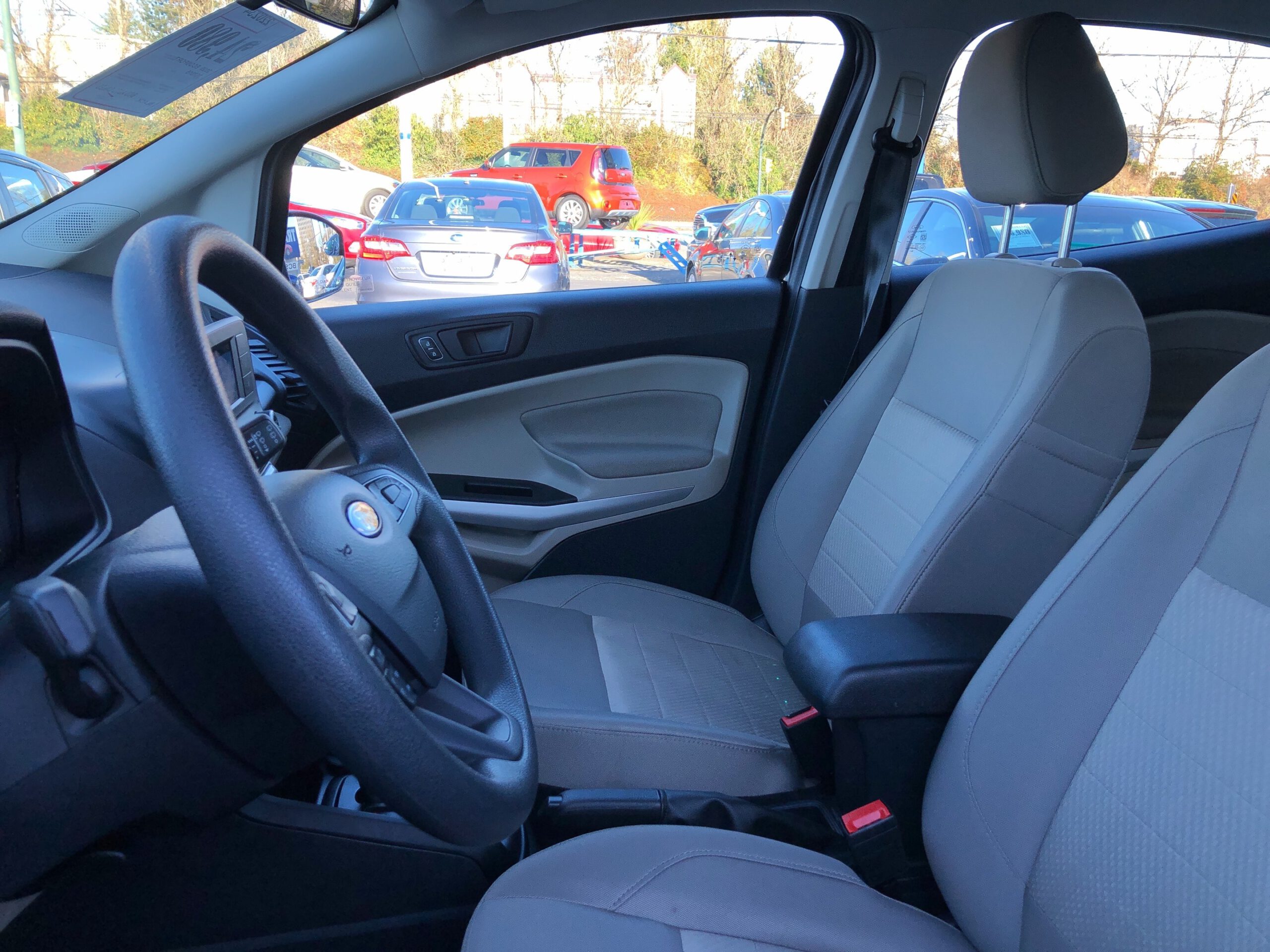
A ten-minute spin around the block won’t tell you much. A proper test drive takes 20–30 minutes and covers the kind of driving you actually do. Bring this checklist with you.
Before you start the engine
- Walk around the vehicle in daylight. Look for mismatched paint, uneven panel gaps or overspray — signs of past repairs.
- Check the tires. Even wear across the tread is good; wear on one edge can point to alignment or suspension issues. Check the tread depth too.
- Look underneath. Fresh drips or heavy rust on the frame, brake lines or exhaust are worth asking about.
- Start it cold if you can. A cold start reveals noises and smoke that disappear once the engine warms up.
- Check the dashboard. All warning lights should come on briefly at start-up, then go out.
On the road
- Brakes: the car should stop straight, without pulling, grinding or a pulsing pedal.
- Steering: on a straight road, the wheel should be centred and the car shouldn’t drift.
- Transmission: shifts should be smooth — no slipping, clunks or hesitation.
- Acceleration: merge onto a highway like Highway 1 or the Lougheed. Power should be smooth and steady.
- Suspension: drive over a few bumps. Listen for knocks and watch for excessive bouncing.
- Noises: turn the radio off. Listen for whining, humming that changes with speed, or rattles.
- Parking: turn the wheel lock to lock at low speed and listen for clicking or groaning.
Inside the cabin
- Heat and A/C: test both, plus the defrost — essential for wet West Coast winters.
- Electronics: windows, locks, mirrors, backup camera, Bluetooth and every seat adjustment.
- Smells: mould or mildew can mean water leaks; a burning smell needs explaining.
After the drive
- Ask for the vehicle history report and service records — see how to read a vehicle history report.
- For extra peace of mind, arrange an independent pre-purchase inspection.
- Write down anything you noticed and ask about it before you negotiate.
Ready to drive something? Browse our inventory and book a test drive.